How Menstrual Hygiene Management & Biblical Identity Keep Girls in School
In many rural and underserved regions of Uganda, reaching puberty marks the beginning of an invisible academic crisis for adolescent girls. What should be celebrated as a natural, God-given milestone of growth often becomes an agonizing season characterized by social isolation, shame, and recurring classroom absenteeism.
| 11% Days Missed Monthly | 61.7% Linked to Sanitation Gaps | 28% Rural Dropout Rate |
The Silent Driver of Classroom Absenteeism
Public health and educational studies published in the Pan African Medical Journal and national assessments highlighted by UNICEF Uganda reveal that adolescent schoolgirls in Uganda can miss up to 11% of academic days each month purely due to menstruation-related challenges. In impoverished rural environments, over 60% of girls report missing school because of three primary factors:
- Commercial Cost Barriers: Lack of financial access to basic commercial sanitary pads, forcing girls to rely on unhygienic alternatives like old rags, dried banana leaves, or sponge foam.
- Inadequate Sanitation Facilities: Absence of private, secure, and clean WASH (Water, Sanitation, and Hygiene) facilities with running water and locking doors in rural school settings.
- Social Stigma & Fear: Overwhelming fear of accidental staining and public teasing from peers, which erodes self-worth and academic confidence.
Over time, missing 3 to 5 school days every month accumulates into substantial academic learning loss. Eventually, frustrated by falling grades and social stigma, roughly 28% of rural primary and secondary girls drop out entirely, leaving them exposed to early forced marriage, teenage pregnancy, and lifelong economic vulnerability.
NextSteps Ministries’ Holistic Intervention: Body, Mind, and Spirit
At NextSteps Ministries Uganda, we believe that no young girl should ever be forced to choose between her dignity and her education. Operating under our Girls’ Health, Dignity, and Menstrual Hygiene Program, we address this crisis through a comprehensive, faith-centered model:
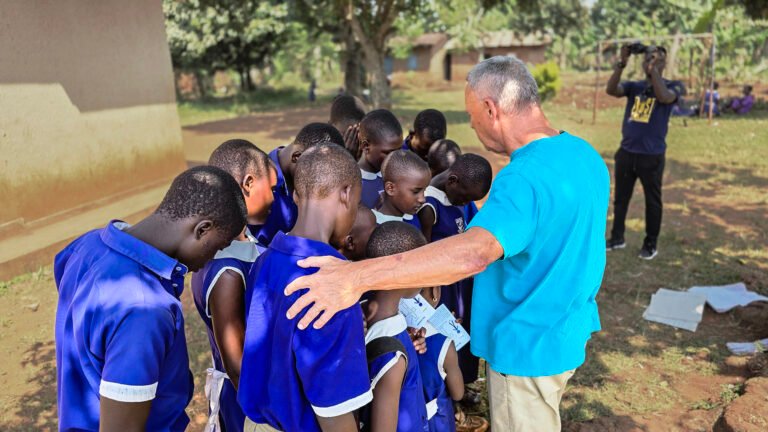
- Comprehensive MHM Workshops: Conducting age-appropriate, medically accurate sessions in partner schools and churches, educating young girls on reproductive anatomy, cycle tracking, and personal hygiene management.
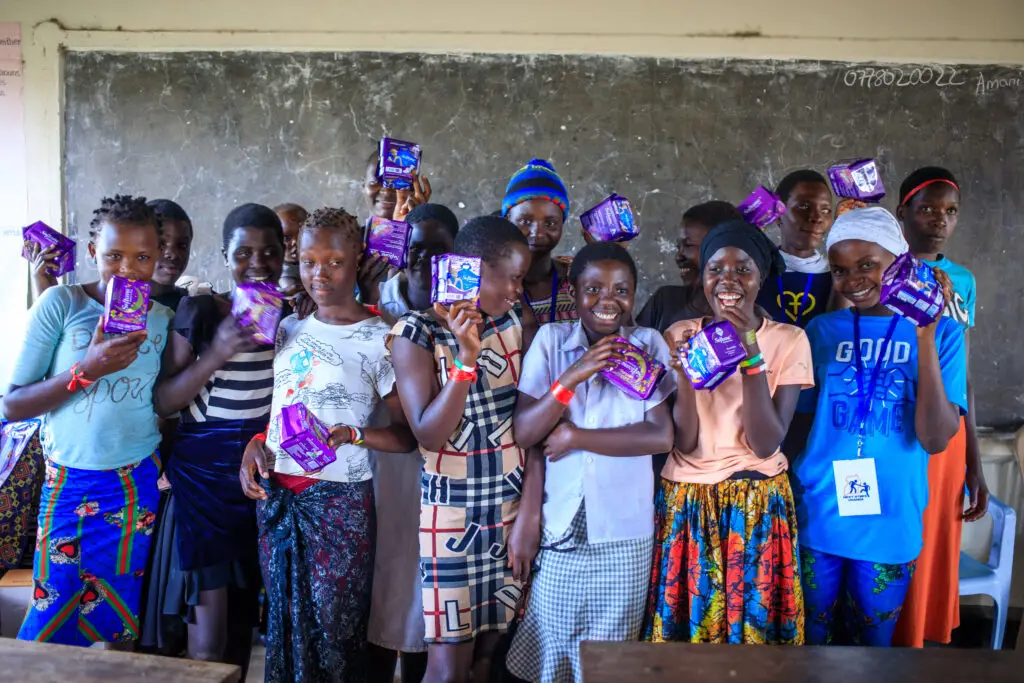
- Dignity Kit Distributions: Providing every girl in the program with a termly hygiene pack containing clean underwear, antibacterial soap, hygiene guides, and high-quality sanitary pads.
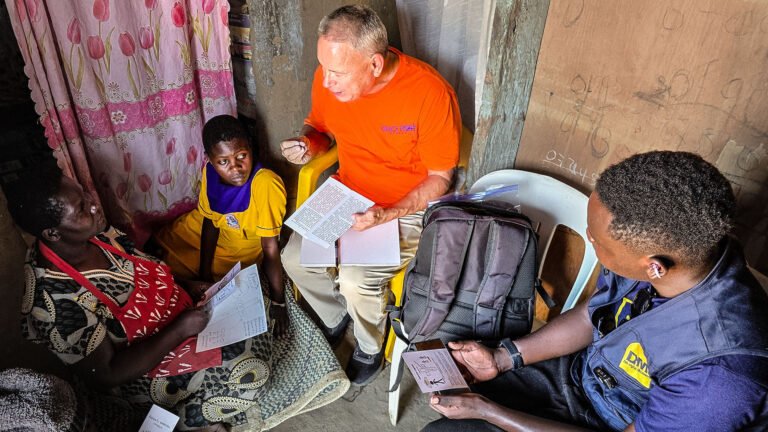
- Faith-Based Mentorship Circles: Small-group circles led by mature Christian female mentors, teachers, and church women’s leaders creating safe spaces where girls ask questions about puberty, relationships, and emotional wellbeing.
- Biblical Identity & Self-Worth: Actively dismantling oppressive cultural taboos by teaching girls that their biological design is intentional, holy, and fearfully and wonderfully crafted by God (Psalm 139:14).
A Closed-Loop Sustainable Solution: Youth Tailoring Micro-Enterprises
A critical concern in menstrual hygiene development is avoiding perpetual dependence on expensive imported disposable pads. To solve this, NextSteps Ministries links our girls’ health initiative directly to our Youth Vocational Tailoring Micro-Enterprises.
Young women enrolled in our vocational skilling workshops are trained to manufacture washable, long-lasting, medical-grade reusable sanitary pads. This innovative integration achieves two vital outcomes simultaneously: it provides dignifying, sustainable employment for out-of-school young women while supplying affordable, locally produced hygiene kits to schoolgirls across Jinja and island communities.
CORE IMPACT TAKEAWAY: Measurable Transformation in Dignity
By pairing practical sanitary provision with biblical self-worth and local micro-enterprise manufacturing, NSM has achieved near-zero period-related dropout rates across sponsored school cohorts, proving that dignity and education go hand in hand.