How Youth-Led Micro-Enterprises and Revolving Capital Drive Sustainable Growth
“A false balance is an abomination to the Lord, but a just weight is His delight.” (Proverbs 11:1)
One of the most persistent dilemmas in international relief and community development across Africa is the trap of donor dependency. When foreign non-profits provide perpetual handouts without building local production capacity, communities can become passive recipients rather than active architects of their own flourishing.
The NextSteps Theory of Change: Dignity Over Handouts
NextSteps Ministries Uganda rejects paternalistic charity models. Our fourth core organizational objective explicitly mandates cultivating self-sufficiency: ‘Transitioning households and youth away from aid dependency into dignified stewardship and sustainable livelihoods.’
We believe that every human being possesses God-given talents and intellectual agency. Our role as a ministry is not to create a permanent welfare line, but to provide the catalytic investment, coaching, and accountability needed for youth and families to take their own ‘next step’ toward economic self-reliance.
The Structure of Community Micro-Enterprises
Through our Community Micro-Enterprises and Community Stewardship Enterprises initiative, graduates from our vocational training cohorts do not simply seek rare wage jobs—they create collective enterprises. Here is how our proven 5-stage incubation model works:
- 1. Collaborative Team Formation: Organizing 5 to 10 skilling graduates with complementary skills, shared Christian values, and proven accountability into a registered cooperative.
- 2. Localized Business Modeling: Enterprise teams craft rigorous business plans targeting proven local market needs, such as commercial carpentry workshops, uniform tailoring hubs, poultry farms, or grain milling centers.
- 3. Catalytic Seed Capital & Machinery: NSM provides asset grants or revolving micro-loans for primary workspace machinery and starting inventory.
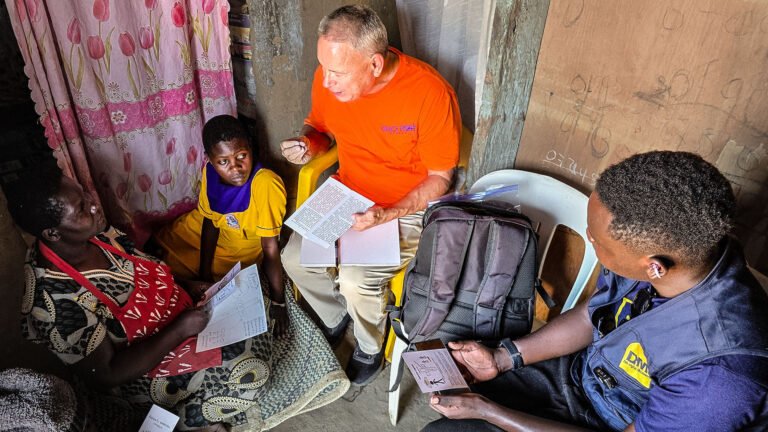
- 4. Weekly Mentorship & Financial Audits: A dedicated ministry business coach conducts weekly on-site audits, reviewing cash ledgers, profit margins, and bank savings records.
- 5. The Revolving Fund Mechanism: As the enterprise generates profits, loan repayments flow back into the community revolving fund to finance the next cohort of youth entrepreneurs.
Marketplace Ministry: The Biblical Principle of Firstfruits
Unlike secular business incubators, NextSteps micro-enterprises operate as platforms for Christian ministry. Teams begin every business day with Scripture reading and prayer for their customers. Furthermore, every enterprise commits a portion of its net earnings (firstfruits) to support the local church and provide school supplies for orphaned children in their village.
By applying fair pricing, honest weights (Proverbs 11:1), and exceptional craftsmanship, these youth-led businesses become living sermons in the local marketplace, earning the respect of municipal leaders and community members alike.
A Self-Sustaining Cycle
Through revolving enterprise capital and commercial production, NextSteps Ministries ensures that community development is financed by local productivity rather than perpetual external charity.